

When you see Magnus Carlsen on the board, you expect control, precision, and victory. But in Round 4 of the TePe Sigeman & Co Chess Tournament 2026, something different happened.
Jorden van Foreest didn’t just survive—he outplayed Carlsen step by step and won a long, exhausting endgame. This wasn’t a quick attack. It was a slow grind where every small advantage mattered.
Let’s break it down in very simple terms so you can understand exactly how this game unfolded.
From equal position to complete control: how the game slipped away from Carlsen
Opening Phase (Moves 1–10): A Quiet Start
The game begins with the Sicilian Defense:
1. e4 c5 2. Nf3 d6 3. d4 cxd4 4. Nxd4 Nf6 5. Nc3 a6
This is a very common setup. Both players know it deeply.
Then comes an important moment:
6. f4 e5 7. Nb3 Be7 8. fxe5 dxe5 9. Qxd8+ Bxd8
White trades queens early.
What this means (simple idea):
- No queens = less attacking chances
- Game becomes positional and strategic
- Small mistakes matter more
Van Foreest clearly wanted a long game, not a tactical fight.
Early Middlegame (Moves 10–20): Small Imbalances Begin
10. Be3 Be6 11. Nc5 Ba5 12. Bd3 Bc8 13. Nb3 Bxc3+ 14. bxc3
Here, something important happens:
- White gets doubled pawns (c-pawns)
- But gains control and open lines
Then:
16. Rb1 Bxe4 17. Bxe4 Nxe4 18. Rxb7
This is a key moment.
White sacrifices structure but:
- Activates rooks
- Gets deep into Black’s position
Carlsen now has to defend carefully.
Critical Middlegame (Moves 20–30): Turning Point
21. Nc6 Rxc6 22. Rb8+ Ke7 23. Rxh8
White wins material (exchange).

But the position is still tricky.
Then:
24. Ra8 Ra4 25. c4 Rxa2
Material looks messy, but here’s the truth:
- White has better activity
- Black’s king is slightly exposed
Then comes a powerful idea:
27. c5!
This move is very strong.
Why?
- Creates a passed pawn
- Restricts Black pieces
- Forces Carlsen into defense
This is where Van Foreest starts taking control.
Endgame Transition (Moves 30–40): Pressure Builds
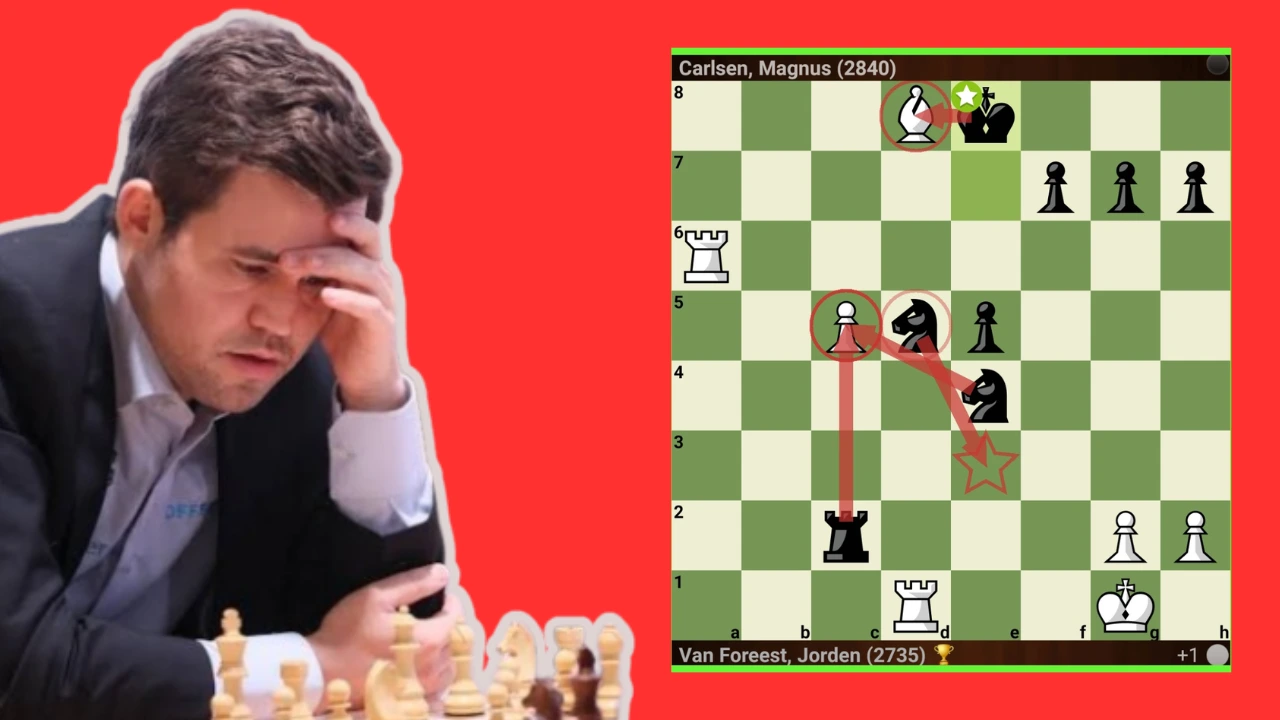
31. Rd1 Nd5 32. Bd8+ Ke8 33. Ra8
White keeps improving slowly.
Then a very nice tactic:
34. Bxf6+
This wins more material and keeps pressure alive.
At this point:
- White has better coordination
- Black is struggling to untangle
Carlsen is already under serious pressure.
Long Endgame Battle (Moves 40–60): Pure Grinding
Now the queens are gone, and we see a classic Carlsen-style endgame… but played by his opponent.
White:
- Improves king position
- Controls key squares
- Slowly pushes pawns
Black:
- Tries to hold
- Looks for counterplay
But Van Foreest stays calm.
Moves like:
41. Bb2, 42. Rg3, 43. Rc3
show perfect patience.
No rush. Just improvement.
Final Phase (Moves 60–88): Carlsen Breaks
By move 60:
60. Re5 Nf5+ 61. Kg4 Nd4
White’s king is active, pieces are coordinated.
Then slowly:
- White pushes pawns
- Controls space
- Limits Black knight
By move 70+, the position becomes clearly winning.
Carlsen tries tricks, but:
Van Foreest doesn’t panic.
Finally:
88. Rd3 — Black resigns
Key Lessons from This Game
1. Queen Trades Change Everything
Early queen exchange turned the game into:
- Strategy battle
- Not tactics
Van Foreest was ready for this.
2. Activity is More Important Than Structure
Even with doubled pawns:
- White had better piece activity
- That mattered more
3. Passed Pawns Win Games
The move c5 was critical.
It:
- Created long-term pressure
- Forced Black to defend
4. Patience Beats Even the Best
Carlsen is known for grinding opponents.
But here:
- Van Foreest outplayed him in his own style
That’s what makes this game special.
Conclusion
This wasn’t a flashy win.
It was something deeper.
Jorden van Foreest showed:
- Calm decision-making
- Strong positional understanding
- Incredible patience
Beating Magnus Carlsen is always huge—but doing it in a long endgame grind is even more impressive.
Frequently Asked Questions (FAQ)
1. Why did Carlsen lose this game?
Magnus Carlsen didn’t lose because of one big mistake.
He slowly got into a worse position because:
- White had better piece activity
- The pawn structure gave White long-term chances
- The passed pawn (c5) created pressure
Over time, these small advantages added up.
2. What was the most important move in the game?
The move 27. c5 was very important.
It:
- Created a passed pawn
- Limited Black’s pieces
- Gave White a long-term plan
Without this move, the game could have been equal.
3. Was the opening a mistake by Carlsen?
No, the opening was completely fine.
The Sicilian Defense is very solid.
The real issues started later when:
- White got more active pieces
- Black had to defend passively
4. What can beginners learn from this game?
A lot, actually:
- Don’t fear queen trades
- Activity is more important than pawn structure
- Passed pawns are powerful
- Be patient—don’t rush attacks
5. Is this one of Carlsen’s rare losses?
Yes.
Magnus Carlsen doesn’t lose often, especially in long games.
That’s why this win by Jorden van Foreest is very impressive.
TePe Sigeman Chess tournament 2026 | HMFLIX