

Gukesh Defeats Praggnanandhaa in a Brilliant Endgame Battle | Norway Chess 2026 Round 9 Analysis
Two of India’s biggest young stars, Praggnanandhaa and Gukesh, faced each other in a tense classical game. Both players know each other’s style very well, making the battle even more interesting.
The game started as a strategic positional fight, but slowly transformed into a complex endgame where one mistake could decide everything. In the end, Gukesh showed excellent patience, calculation, and fighting spirit to defeat Praggnanandhaa with the black pieces.
Let us go through the game step by step and understand how Gukesh managed to win this important encounter.
Opening Phase
The game began with:
1.d4 Nf6 2.c4 e6 3.Nf3 d5 4.Nc3 Bb4
Gukesh chose the Ragozin Defense setup. This opening is very popular among elite players because it combines solid development with active piece play.
After:
5.Qa4+ Nc6 6.Qc2 Bd6
Praggnanandhaa checked the king and then moved the queen back. The position remained balanced.
Both players developed naturally:
7.Bg5 h6 8.Bxf6 Qxf6
Pragg exchanged his bishop for the knight. This gave Gukesh the bishop pair, which can become powerful in open positions.
After:
9.e3 O-O 10.c5
Praggnanandhaa pushed his pawn to c5 and gained space on the queenside.
At first glance, White looked comfortable because he had more space. However, Gukesh remained calm and focused on long-term counterplay.
Building Plans
The next phase was all about preparation.
11.Bb5 Bd7 12.O-O Rfd8 13.h3 g6
Neither player rushed into action.
Gukesh slowly improved his position while preparing future kingside and queenside operations.
After:
14.a3 a6 15.Bxc6 Bxc6
Pragg exchanged another piece. This reduced White’s attacking chances and increased the importance of pawn structure.
Then came:
16.Ne5 Be8 17.f4
Praggnanandhaa advanced his pawns and occupied important central squares.
At this moment White appeared slightly better because he controlled more space.
However, Gukesh had a clear plan.
Gukesh Starts Counterplay
The critical moment began with:
17…b6
This move challenged White’s pawn chain.
Then:
18.b4 a5
Gukesh immediately attacked the queenside structure.
This is a common strategy. When your opponent gains space, you try to attack the base of their pawn chain.
The battle now shifted toward the queenside.
After:
19.Rfb1 Qg7 20.Qe2 Rdb8

Gukesh lined up his rooks and prepared for future pressure.
At this stage the game remained balanced, but Black’s pieces were becoming very active.
Central Tension Explodes
The next important moment came with:
21.e4
Praggnanandhaa tried to seize more central space.
Gukesh responded correctly:
21…dxe4 22.Nxe4
The center opened slightly.
Then:
22…Ra7
A flexible move that prepared rook activity along the seventh rank.
After:
23.Qe3 Qf8 24.Kh2 Kh7
Both players improved their king safety before entering a more tactical phase.
The game was becoming increasingly complicated.
The Advance of the Queenside Pawns
Pragg now tried an ambitious plan:
25.b5
This move gained space but also created long-term weaknesses.
Gukesh immediately replied:
25…a4
The pawn became a dangerous spear deep inside White’s territory.
Then came:
26.c6
White advanced another pawn.
Now the board contained several advanced pawns and many strategic imbalances.
These types of positions are difficult to evaluate because both sides have strengths and weaknesses.
The Turning Point
After:
27.Rd1 f6
Gukesh attacked White’s centralized knight.
Then:
28.Nc4 Bf7 29.Qe2 Qg8
Black’s pieces started gathering around the kingside.
The position remained extremely tense.
Both players were now running low on time.
Then came a major breakthrough:
32…e5
This was one of the most important moves of the game.
Why was it strong?
Because Gukesh finally challenged White’s center directly.
After:
33.d5 exf4
Black won an important pawn and opened attacking lines.
The position suddenly became very sharp.
Tactical Battle Begins
Pragg tried to maintain pressure:
34.Qf2 g5
Gukesh launched a kingside pawn storm.
Then:
35.Nxb6
White grabbed a pawn.
At first this looked good for Praggnanandhaa.
However, Gukesh had calculated deeper.
After:
35…cxb6
Black regained material while opening important files.
Then came:
36.d6
White pushed his dangerous passed pawn.
This pawn looked scary because it was close to promotion.
Many spectators probably thought White had excellent winning chances.
But Gukesh had everything under control.
Gukesh Finds the Perfect Defense
The next sequence was extremely impressive.
36…Bf8
A calm defensive move.
Instead of panicking about the passed pawn, Gukesh reorganized his pieces.
Then:
37.Qxb6 g4
The attack began.
Rather than focusing only on defense, Gukesh created threats against White’s king.
This is often the best defense in chess.
Create counterplay.
After:
38.hxg4 Qxg4
The queen entered the attack.
Suddenly White’s king started feeling uncomfortable.
Black Takes Control
Pragg attempted to defend:
39.Qf2
But Gukesh continued energetically:
39…Re3
A brilliant attacking move.
The rook invaded White’s position and created multiple threats.
Now Black’s pieces worked together perfectly.
White’s king became increasingly vulnerable.
After:
40.Rd4 Qh5+
A forcing check.
Then:
41.Kg1 Qe5
The queen switched to another attacking square.
Every move increased the pressure.
The Decisive Mistake
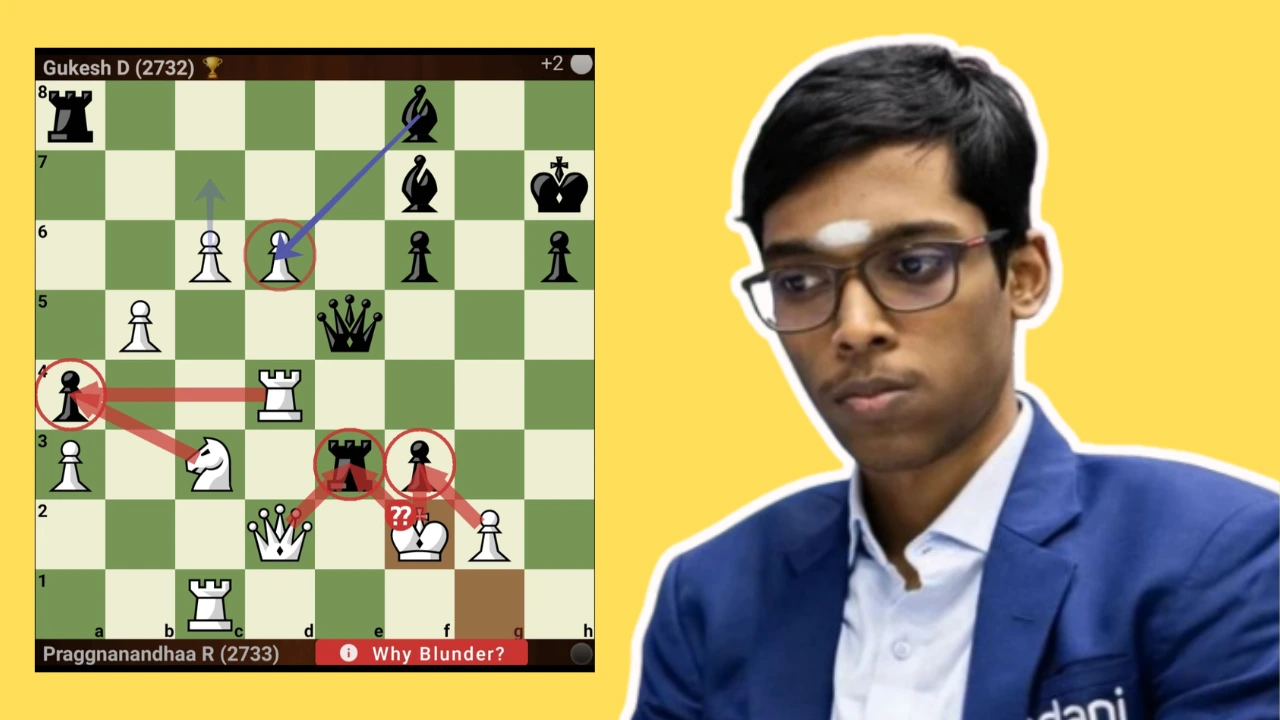
The critical moment arrived after:
42.Qd2 f3
A powerful move.
The pawn entered White’s position and opened additional attacking lines.
Praggnanandhaa tried:
43.Kf2
But Gukesh had seen everything.
Then came:
43…Bxd6
Black removed White’s dangerous passed pawn.
This was a key moment.
The pawn that looked like White’s main winning chance disappeared.
Suddenly Black’s attack became much stronger than White’s counterplay.
Beautiful Finishing Combination
The final moves showed outstanding calculation.
44.Rxd6 Rg8
The rook joined the attack.
Then:
45.gxf3
White captured the advanced pawn.
However, this opened lines around the king.
Gukesh immediately punished it.
45…Rxf3+
A powerful sacrifice.
The attack now became unstoppable.
After:
46.Kxf3 Bh5+
Another precise move.
The bishop entered with check.
White’s king was trapped.
Then:
47.Kf2 Qg3+
At this point Praggnanandhaa resigned.
The threats against the king were overwhelming.
Checkmate could not be avoided.
Why Gukesh Won This Game
Several factors helped Gukesh secure victory.
1. Patience in the Opening
Gukesh never rushed.
Even when White had more space, he calmly improved his position and waited for the right moment to strike.
2. Strong Queenside Counterplay
Moves like b6 and a5 challenged White’s space advantage and prevented Pragg from building a comfortable position.
3. Perfect Central Break
The move 32…e5 completely changed the game.
It opened lines and activated Black’s pieces.
4. Active Defense
When White created a dangerous passed pawn, Gukesh did not become passive.
Instead, he created threats against White’s king.
5. Excellent Calculation
The final attacking sequence showed world-class tactical vision.
Every move increased the pressure until White’s position collapsed.
Key Lessons for Club Players
This game teaches many useful lessons.
Do Not Fear Space Disadvantages
Even if your opponent controls more space, active piece play can compensate.
Counterplay Is Important
When under pressure, look for active chances rather than passive defense.
Timing Matters
The move 32…e5 worked because Gukesh prepared it carefully.
Passed Pawns Are Not Everything
Praggnanandhaa’s passed pawn looked dangerous, but active pieces proved more important.
Coordinate Your Pieces
The final attack succeeded because Black’s queen, rook, bishop, and pawns all worked together.
Conclusion
Gukesh’s victory over Praggnanandhaa in Round 9 of Norway Chess 2026 was a masterpiece of patience, strategy, and tactical precision.
For much of the game, the position appeared balanced. Praggnanandhaa created space and advanced a dangerous passed pawn. However, Gukesh gradually improved his pieces, found the perfect central break with 32…e5, and then launched a powerful attack against the white king.
His ability to stay calm under pressure and calculate accurately in complex positions allowed him to convert a difficult battle into a memorable victory.
This game will likely be remembered as one of the best examples of active defense turning into a winning attack in Norway Chess 2026.
FAQ
1. What opening was played in Praggnanandhaa vs Gukesh?
The game started with a Ragozin Defense setup. Gukesh used an active and flexible opening that allowed him to challenge White’s center while maintaining strong piece development. The opening remained balanced, but it gave Black good chances for counterplay later in the game.
2. What was the most important move of the game?
The most important move was 32…e5. This move challenged White’s center and opened important lines for Black’s pieces. It transformed a quiet positional battle into a dynamic tactical fight and gave Gukesh the initiative.
3. Why was Praggnanandhaa’s passed pawn not enough?
Pragg’s pawn on d6 looked very dangerous because it was close to promotion. However, Gukesh created strong attacking chances against White’s king. Eventually, Black eliminated the passed pawn with 43…Bxd6, removing White’s biggest advantage.
4. How did Gukesh start his kingside attack?
The attack began with moves such as g4, Qxg4, and Re3. These moves activated Black’s queen and rook while exposing weaknesses around White’s king. Once the attack started, Black’s pieces coordinated beautifully.
5. Was this game decided by tactics or strategy?
The game was decided by both. The early stages were mostly strategic, involving pawn structure, space, and piece placement. The final phase became highly tactical, where Gukesh’s calculation and attacking skills proved decisive.
6. What can amateur players learn from this game?
Amateur players can learn several lessons:
- Stay patient in difficult positions.
- Look for active counterplay.
- Prepare pawn breaks carefully.
- Coordinate all pieces before attacking.
- Do not rely only on passed pawns.
- King safety is often more important than material.
These lessons are valuable for players of every rating level.
7. Why is this victory important for Gukesh?
Winning against another elite grandmaster in a classical game at Norway Chess is always significant. The game showcased Gukesh’s maturity, defensive skills, and attacking ability. It also demonstrated that he can successfully handle complex strategic positions against the world’s strongest opponents.