

Gukesh Crushes Wesley So in a Sharp Rapid Battle
This game is a great example of how Gukesh D uses patience, pressure, and sharp tactics to defeat a strong and solid player like Wesley So. Even though it started quietly, it slowly turned into a complex battle where Gukesh took control.
Opening Phase (Moves 1–10): Calm and Flexible Setup
The game begins with:
1. Nf3 Nf6 2. b3
Gukesh chooses a flexible and slightly uncommon opening setup. The idea is simple:
- Develop pieces safely
- Control the center later
- Avoid heavy theory
After 3. Bb2, White aims for long diagonal pressure. Wesley So responds solidly with d5 and Bf5, building a classical structure.
Moves like g3, Bg2, O-O show that Gukesh is playing a calm positional game. Both players complete development without any early risk.
Early Middlegame (Moves 10–20): Tension Builds
The first important moment comes with:
10. e4
This is where Gukesh challenges the center. After exchanges, the position becomes open and dynamic.
Key moments:
- 12. Nce4 improves piece activity
- 14. Nc4 puts pressure on Black’s position
- 15…Nb4 shows So trying to create counterplay
Then:
19…Bxb2 20. Qxb2 Qd4
Wesley So trades bishop for knight and activates his queen. At this point:
- Black looks active
- White has better coordination
Gukesh calmly continues with a4, stopping queenside expansion and preparing space.
Middlegame Fight (Moves 21–35): Complexity and Time Pressure
Now the game becomes very sharp.
Moves like:

- 22…Qb4
- 23…Nd4
- 24. Ne5
show both players fighting for control.
Important idea:
Gukesh places his knights actively and keeps attacking chances alive.
Then comes a critical phase:
27…f6 28. N5c4
This is a strong decision. White repositions the knight instead of retreating passively.
After:
31…Nxd1 32. Rfxd1
Material becomes slightly unbalanced, but White gets better coordination.
Turning Point (Moves 35–42): Tactical Explosion
This is where the game becomes wild.
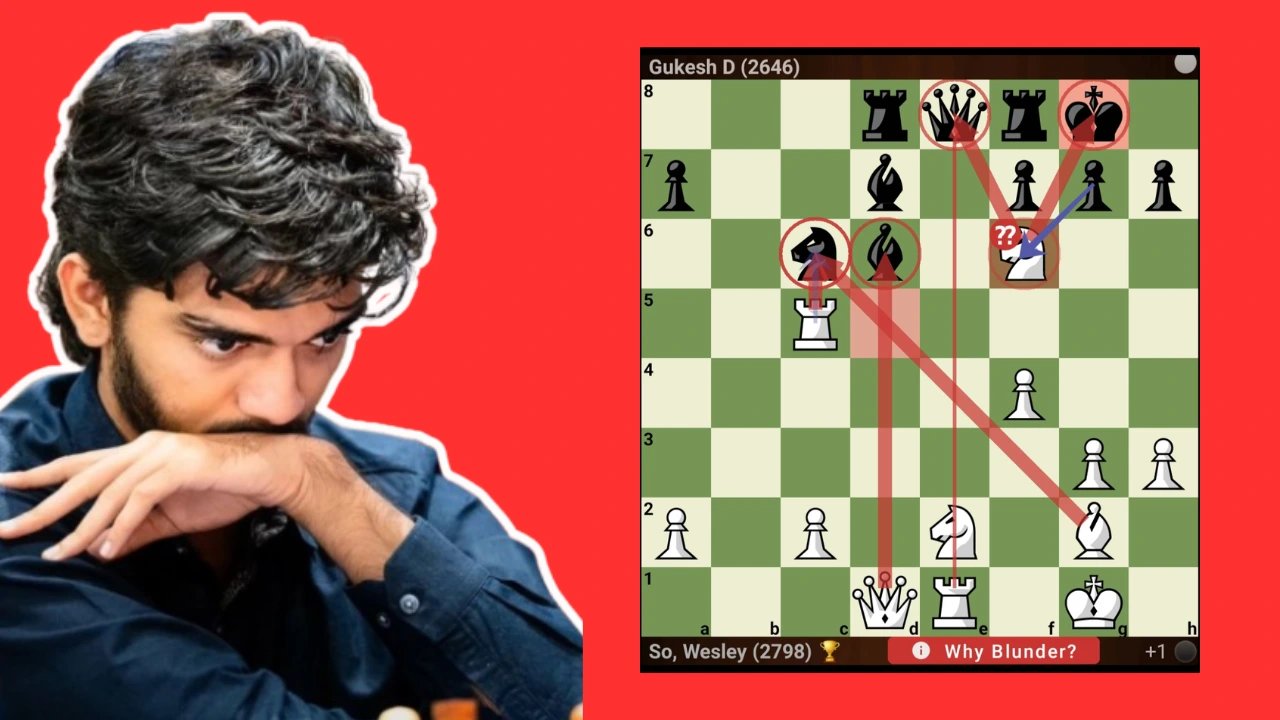
35. Rxc5!
A very strong move. He grabs a pawn and activates his rook.
Then:
36…Nxg3 37. fxg3 Qxg3
Wesley So tries to counterattack by sacrificing material and opening lines.
But here is the key:
- White’s king stays safe
- Black’s attack is not enough
Gukesh defends accurately with:
38. Qc1 39. Qe3 40. Qf2
He neutralizes the attack step by step.
Finally:
42. Qxf4 Rxf4
Queens are exchanged. This is important because:
- Black loses attacking chances
- White enters a better endgame
Endgame Phase (Moves 43–62): Gukesh Takes Over
Now Gukesh shows excellent technique.
43. Ra1 and 44. Rc6
White improves rook activity and controls open files.
Then:
45. Raxa6
A strong move that wins space and increases pressure.
After exchanges:
47. Rxf4 exf4
The position simplifies, but White still has:
- Better structure
- Active pieces
Key moment:
49. Nd6
This is a powerful central move. The knight dominates the board.
Then:
50. b4 52. b5 54. b6 55. b7
Gukesh pushes his passed pawn step by step. This is classic endgame technique.
Final Phase: Promotion and Victory
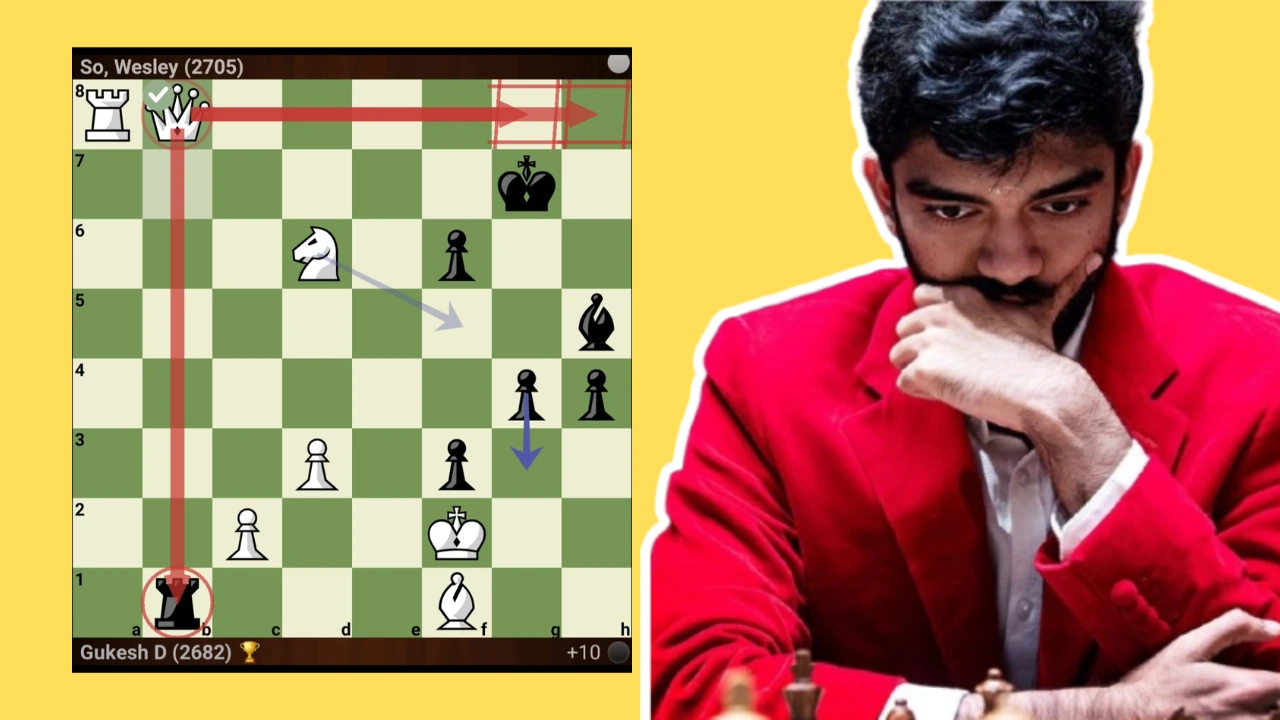
The final sequence is very precise:
57. b8=Q
The pawn promotes to a queen. Even though Black tries tricks with:
- g3+
- Rxb8
- g2
Gukesh stays calm.
Final move:
62. Nf5+
At this point, Black cannot stop the attack or survive. Wesley So resigns.
Key Lessons from This Game
- Play Flexible Openings
Gukesh avoided heavy theory and played a simple system that led to a playable middlegame. - Piece Activity is More Important Than Material
Even when material was unclear, Gukesh kept his pieces active. - Stay Calm Under Pressure
When So launched a counterattack, Gukesh defended accurately instead of panicking. - Convert Endgames Step by Step
The passed pawn push from b4 to b8 is a perfect example of clean technique.
FAQ Section
1. Why did Gukesh play b3 in the opening?
The move b3 prepares Bb2, which controls the long diagonal. It is a flexible and safe system that avoids deep opening preparation. It also allows White to decide later how to build the center.
2. Was Wesley So’s attack with Nxg3 correct?
It was a practical decision, especially in rapid time control. Moves like Nxg3 and Qxg3 create complications and put pressure on White. However, objectively:
- The attack was not fully sound
- Gukesh defended accurately
- Black did not have enough compensation
3. What was the biggest mistake by Wesley So?
The biggest issue was overcommitting to the attack without full calculation. After queens were exchanged, Black’s position became worse because:
- No attacking chances remained
- White had a strong passed pawn
4. Why was the move 35. Rxc5 so important?
This move:
- Wins a pawn
- Activates the rook
- Forces Black into complications
It shifted the game in White’s favor and started the winning phase.
5. What can beginners learn from this game?
Beginners can learn:
- Develop pieces before attacking
- Don’t rush into attacks without calculation
- Passed pawns are very powerful in endgames
- Stay calm and play simple moves under pressure
Final Thoughts
This game shows the maturity of Gukesh D. He handled every phase well:
- Calm opening
- Active middlegame
- Precise defense
- Clean endgame conversion
Against a strong and experienced player like Wesley So, this kind of performance is very impressive.
GRAND CHESS TOUR 2026 | HMFLIX